Fertility can be influenced by many factors, including age, ovarian function, and overall reproductive health. As women explore different options for supporting their fertility, ovarian rejuvenation has gained attention as an emerging approach.
One method associated with ovarian rejuvenation involves platelet rich plasma ovaries, which uses components derived from a person’s own blood. But what exactly is ovarian rejuvenation, and how does PRP fit into this approach?
Understanding the process, potential goals, and available treatment options can help provide a clearer picture of this developing area of fertility care.
What Is Ovarian Rejuvenation & How Does PRP-Based Ovarian Rejuvenation Work
Ovarian rejuvenation is one of the emerging methods that aim to promote ovarian function and responsiveness. PRP ovarian rejuvenation uses platelet-rich plasma obtained from the patient's blood and delivered into the ovaries.
Here’s how PRP-based ovarian rejuvenation generally works:
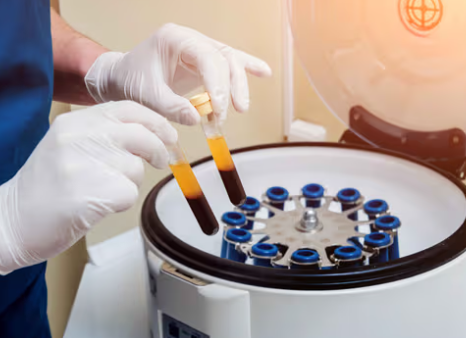
- Blood collection: A small sample of the patient’s own blood is collected.
- PRP preparation: The blood is processed to concentrate platelets and growth factors.
- Ovarian delivery: PRP is administered to the ovaries under ultrasound guidance.
- Mode of action: Growth factors contained in platelet rich plasma are thought to play a role in supporting the local ovarian microenvironment and follicular activity.
- Evaluation: Functionality of the ovaries may be determined by blood tests and ultrasound examination, among others.
Who May Consider Ovarian Rejuvenation Therapy?
Ovarian rejuvenation therapy is not appropriate for everyone. A reproductive endocrinologist should review an individual’s fertility history, testing, overall reproductive health, and treatment goals before determining whether PRP is worth considering.
According to the clinic’s patient criteria, women exploring this approach may include those experiencing:
- Low AMH: AMH is used to evaluate ovarian reserve when discussing ovarian PRP.
- Diminished Ovarian Reserve(DOR): Women with reduced ovarian reserve may explore PRP as an emerging option.
- Premature Ovarian Insufficiency: It is the situation in which there is a loss of normal ovarian function before the age of 40.
- Previous IVF Challenges: Women who have undergone multiple IVF cycles without achieving the desired outcome may discuss ovarian PRP with a fertility specialist. .
- Age-related Fertility Decline: Female patients above the age of 40 may consider advanced fertility treatment, which may include ovarian PRP.
- Poor Ovarian Response: Women who have had a poor response from their ovaries during fertility treatments in the past may consider possible treatment.
- Concerns About Egg Quality: Advanced fertility treatment patients may consider PRP if they have poor egg quality.
Potential Benefits and Goals of Ovarian Rejuvenation
Research on ovarian rejuvenation is ongoing, so potential benefits should be understood as areas being investigated rather than guaranteed outcomes.
Supporting Ovarian Function
One goal of ovarian PRP is to potentially support ovarian function and the local follicular environment. Researchers are investigating whether PRP may influence ovarian activity in some patients.
Supporting Follicular Activity
Another area of interest is follicular activity. Early studies have reported changes in markers such as antral follicle count in some participants, although results have not been uniform across studies.
Changes in Ovarian Reserve Markers
Studies have investigated markers including AMH and FSH following intraovarian PRP. Some systematic reviews have reported improvements in certain ovarian reserve or response measures, but the available studies differ considerably in design, treatment protocols, and patient populations.
Supporting IVF Response
Researchers are also examining whether PRP may affect ovarian response during later IVF stimulation cycles, including the number of retrieved oocytes and other reproductive outcomes. Some analyses have reported positive associations, but much of the available evidence comes from observational or heterogeneous studies, so further controlled research is needed.
Ovarian Rejuvenation Therapy vs. Other Fertility Treatments
Ovarian rejuvenation should be viewed as an emerging approach that may be discussed as part of an individualized fertility plan, rather than as a universal replacement for established fertility treatments.
Treatment/Approach: Ovarian PRP / ovarian rejuvenation
Main Purpose: Examine possibilities for promoting healthy ovulation and follicle growth
How it Differs From Ovarian PRP: Uses one’s own PRP, which is injected into the ovaries under ultrasound guidance.
Treatment/Approach: IVF
Main Purpose: Artificially fertilize eggs and then implant the embryos created into the uterus
How it Differs From Ovarian PRP: IVF is an assisted reproductive technique that has already been proven effective; ovarian PRP can be used together with IVF in certain cases but not as its replacement.
Treatment/Approach: Ovarian stimulation
Main Purpose: Promotes growth of many follicles for infertility treatment
How it Differs From Ovarian PRP: Being studied for its potential effects on the uterine lining | Involves PRP delivered to the uterine cavity rather than directly into the ovaries.
Treatment/Approach: Uterine/endometrial PRP
Main Purpose: Investigate any possible impact on the environment of the uterine lining
How it Differs From Ovarian PRP: Uses fertility medications to stimulate follicle development; PRP instead involves direct ovarian administration of concentrated platelets.
Treatment/Approach: Individualized fertility care
Main Purpose: Focus on what is preventing conception in a particular individual
How it Differs From Ovarian PRP: May combine established treatments such as IVF with emerging approaches when clinically appropriate.
It is all about choosing the right option based on various factors, including ovarian reserve, age, past fertility therapy experience, and reproductive condition, among others. The fertility expert will be able to tell you what treatments have been proven to work.
Patients considering ovarian rejuvenation Texas options should also ask their fertility specialist about established alternatives, the available scientific evidence, potential risks, and whether PRP is appropriate for their specific fertility circumstances.
Conclusion
Ovarian rejuvenation PRP is one of the promising fertility strategies for women who suffer from low ovarian reserve and poor response to ovarian stimulation. The early results have shown some markers that may change during the treatment, but there is still no solid proof yet. Any woman who wants to try platelet rich plasma ovaries needs to schedule a consultation with a reproductive endocrinologist.